14.2 虚拟语气的用法
(1)与现在事实相反的假设:
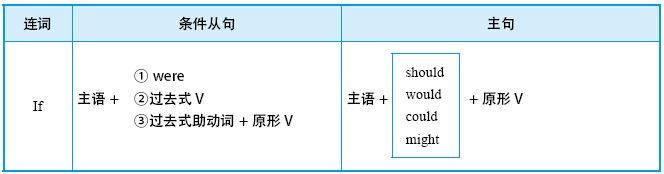

如:
If I had to choose a slogan it woulde be“Unity in our diversity”.
如果我必须选一句口号,那就是“异中求同”。
If I had time,I would choose to travel around the world.
我若有时间,我就要游遍全世界。
You would be shocked if the inside of your bedroom were suddenly changed to look like the inside of a restaurant.
假如自己的卧室的内部装饰突然变得如同饭店的内部装饰,你会大吃一惊。
说明:
①此句型用来表示“与事实相反的假设”。
②条件从句中的动词用过去式。
③be动词,不论人称,一律用were,如:
If I were a bird,…
If you were here,…
If he were rich,…
(2)与过去事实相反的假设:
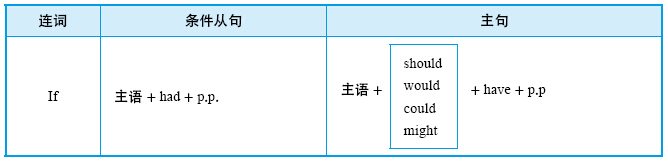

如:
She might have caught the train if she had taken a taxi yesterday.
昨天如果她坐出租车去,也许就能赶上火车了。
[但她当时没有打车,所以他没有赶上火车。]
If l had trained as an athlete,I would have been world famous long ago…
假如当初我接受运动员训练的话,我早就闻名世界了。
说明:
①此句型用来表示“与过去事实相反的假设”。
②虽然在If从句里,动词用had+p.p.,但其结果和“现在”有关时,主句的动词用→would(should…)+原形V,如:
I shouldn’t have recognized the man even if you had told me his name.
即使你告诉我他的名字,我也认不出他。
If he had tried to reach the opposite shore,we wouldn’t have had to pick him up in the boat.
假如他当时更加努力地朝对岸游去,我们就不必用船接他了。
注意:
此句型的主句通常和now,today等词连用。
(3)与将来事实相反的假设:


如:
We wouldn’t lose courage even if we were to fail again.
即使我们再次失败,我们也不会丧失勇气。
If I shouldn’t take the exam tomorrow,I would go with you to the movie.
假如明天不考试,我就和你一起去看电影了。
说明:
①此句型用来表示“与将来事实相反的假设”。
②条件从句动词不分人称与数,一律用“were to+原形V”。
③主句动词用“过去式助动词+原形V”。
注意:
如果要表示“对未来强烈怀疑”时,可用下列的句型:


如:
If he should be elected chairman,we’ll all resign.
万一他当选主席,我们将全体辞职。
If any person be found guilty,he shall have the right of appeal.
被认为有罪的人有权提出上诉。
说明:
①用于对未来表示怀疑的“should”,解释为“万一”。
②条件从句动词不分人称与数一律用“should”。
③主句动词可用“shall,will…”,或“should,would…”等。
(4)虚拟语气的其他形式:
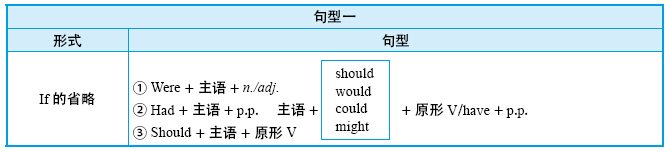

如:
Without paper our modern world would come to a standstill.
没有纸张我们的世界将陷入停顿。
Given more attention,the work could have been done better.
(=If it had given…)
如果给予更多关注,这项工作本来可以做得更好。
The students wouldn’t have made so much progress under less favorable conditions.
(=If they had been under…)
假如在不太有利的条件下,学生们就不会取得这么大的进步了。
说明:
条件从句中的if有时候被省略;在这种情境下,条件从句的动词就要移到主语之前,如上面的句型。


I wish I had seen the play on TV the other night.
我真希望前几天在电视上看了这出话剧。
I wish you had not hurt Jim so much.He is still very depressed.
我希望你没有把吉姆伤害得那么深。他现在还很消沉。
I wish I could have gone to the movies with you last night.
我希望昨晚能和你一起去看电影。
I wish I could have slept longer this morning,but I had to get up and come to class.
我希望自己今天早晨能多睡一会儿,可是我不得不起床去上课。
I wish I were a doctor.
我希望自己是一名医生。
说明:
①“I wish+虚拟语气”表示“不可能实现的愿望”。wish后面的that常被省略,本句型作“但愿……;真希望……;要是……就好了”解。
②I wish+were/过去式动词,表示“现在”不能实现的愿望。
③I wish+had+p.p.,表示“过去”不能实现的愿望。
④I wish=If only=Would that
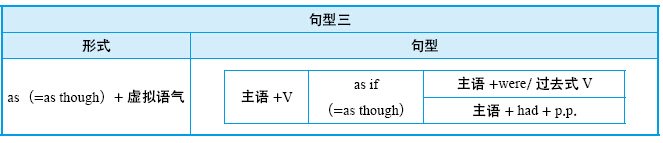

如:
He works hard as if he never felt tired.
他工作努力,好像从来不知道疲倦。[事实上,不可能不疲倦。]
It seemd as if all of a sudden the animal had smelt danger in the air.
似乎突然之间这只动物就嗅到了危险即将来临。
说明:
①as if或as though都表示“好像是”,其后所接的从句,只要是表示“与事实相反的”,都要像接在I wish后的从句一样,动词用“虚拟语气”。
②as if+主语+过去式助V+原形V[与未来事实相反]
注意:
(a)as if(=as though)所引导的从句,常表示虚拟语气,但也可用直陈语气表示“真的或可能发生的事”,如:
It looks as if it is going to be sun tomorrow.
看起来明天可能天晴。[可能性很大。]
(b)as if之后接一般过去时或过去完成时,要视主句的动词关系而定。
与主句的动词所表示的时态相同的事情,用“一般过去时”表示。
He looks as if he is the winner.
他现在看起来好像是赢家。
He looked as if he is the winner.
那时他看起来好像是赢家。
在主句动词发生的时间以前发生的事情,用“过去完成时”表示。
He looks as if he had been the winner.
他现在看起来好像是赢家。
He looked as if he had been the winner.
那时他看起来好像已是赢家。


如:
It is time you started taking life seriously.
=It is time you should start taking life seriously.
=It is time for you to start taking life seriously.
该是你开始认真对待生活的时候了。
It’s(high)time that you realized that you are not the most important person in the world.
你该意识到自己并不是世界上最重要的人。
说明:
①此句型译为“该是……的时候了”。
②about,high为加强语气用,与that一样,常省略。
③It is time+从句,从句的动词要用一般过去时。
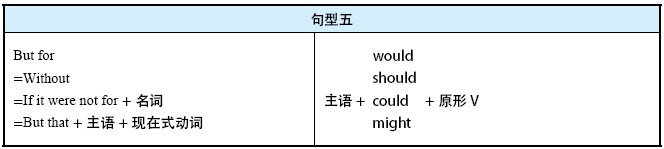

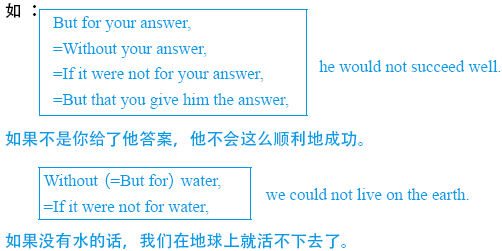

说明:
①此句型译为“若非;要不是”。
②But for+名词,用以代替“与现在事实相反”的“否定条件从句”,其后的主句的动词要用would+原形V。
③But that+从句,所表示的是“现在的事实”,故动词用现在式。
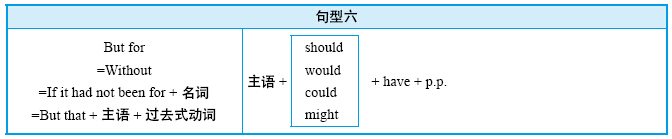

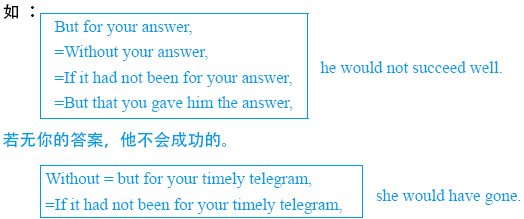

=She would have gone if you had not given her the telegram in time.
如果不是你及时送来电报,她早已走了。
说明:
①But for+名词,用以代替“与过去事实相反”的“否定条件从句”,其后的主句的
动词,要用would+have+p.p.。
②But that+从句,所表示的是“过去的事实”,故动词用一般过去时。
注意:
Only that与But that的意义和用法皆一样,其句型如下:
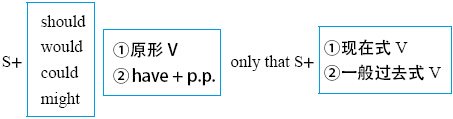

如:
I would have finished the task,only that the enemies returned suddenly.
要不是敌人突然回来,我就完成任务了。
Only that the enemies return suddenly today,I would finish the task.
要不是今天敌人突然回来,我就完成任务了。
Only that I worked hard,I might have failed.
要不是我努力工作,我就会失败了。


如:
The doctor insisted that he(should)do exercises every day.
医生坚持要他每天锻炼身体。
They suggested that he(should)give up the chance.
他们建议说他应放弃这次机会。
We moved that he(should)be promoted.
我们提议他应该升职。
The judge recommended that both sides(should)calm first.
法官建议双方应该首先平静一下。
The boy made the suggestion that he(should)go to school alone.
这个男孩建议他应自己去上学。
说明:
①此句型常用于表示“建议、要求、坚持、命令”等的动词或名词含义的句中,其后的should常被省略,有“将做或该做……”之意。
②常用于此句型的动词如下:
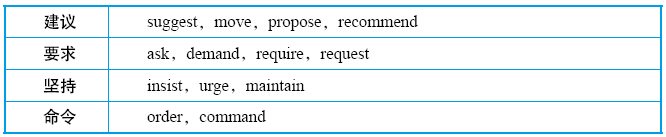

注意:
(a)注意insist的用法:
表示“坚持某人该如何”时,其句型:
S+insist+[that S+(should)+原形V]
I insist that you(should)accept her advice.
我坚持你一定要接受她的建议。
The general insisted that the war should start right now.
=The general insisted on the war’s starting right now.
将军坚持战争应该马上开始。
表示“强调事实或经验”时,其句型:
S+insist+[that S+V(一般过去式V)…]
I insisted that it was an accident.
我强调都是意外事件。
(b)试比较下列句子:
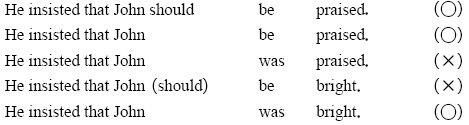

说明:
(a)前两句坚持that从句里应该产生表扬的动作,所以should可保留或省略。
(b)最后一句强调that从句里“聪明”的事实,所以that从句的动词时态要和前面的动词时态一致。


如:
Is it necessary that he take part in the meeting?
他有必要参加这次会议吗?
It is essential that the passport should be taken with.
护照必须随身携带。
It is proper that she win the game.
她当然会赢得比赛。
说明:
①此句型表示“做某事是必要的或重要的”。
②类似此种形容词的有:


③另一种表示情绪方面的主观看法,其后所接之从句亦用should,有“居然、竟然”之意。
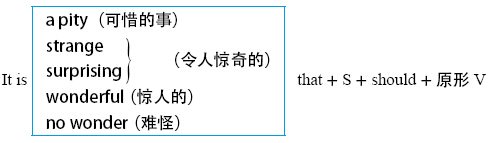

如:
It is strange that she should work in this company.
她竟然在这样的公司上班。
It is a pity that he should be eliminated.
真可惜,他竟然被淘汰了。